SHAONK
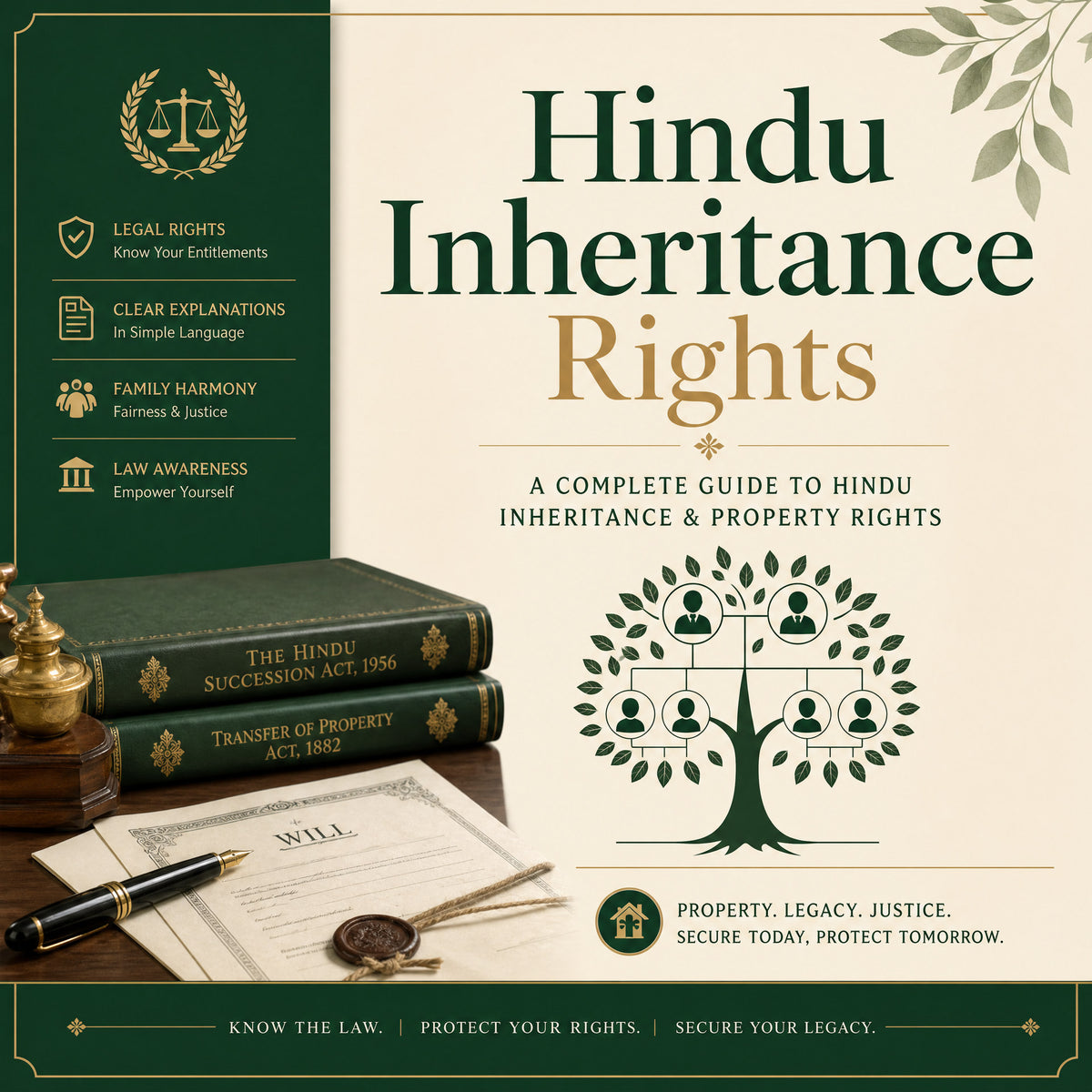
Hindu Inheritance & Property Succession Rights: Coparcenary, Wills & Partition in India [English Edition]
Hindu Inheritance & Property Succession Rights: Coparcenary, Wills & Partition in India [English Edition]
Couldn't load pickup availability
Hindu Inheritance & Property Succession Rights: Coparcenary, Wills & Partition in India
A Comprehensive Citizen Handbook on Hindu Succession Act 1956, Equal Rights for Daughters (Vineeta Sharma), Class I Heirs, Intestate Succession, and Partition Suits
🌠Available in 10 Authentic Regional Languages:
Click any language variant selector on this page to immediately switch the entire guide, title, and curriculum to that language and order that exact edition.
âš–ï¸ Statutory & Judicial Grounding
Statutes Referenced: Hindu Succession Act 1956 (amended 2005), Indian Succession Act 1925, Transfer of Property Act 1882, Code of Civil Procedure 1908
Landmark Precedents: Vineeta Sharma v. Rakesh Sharma (2020) 9 SCC 1; Danamma v. Amar (2018) 3 SCC 343; Prakash v. Phulavati (2016) 2 SCC 36; V. Tulasamma (1977)
📚 Complete 10-Module Practical Curriculum & Court Procedures
Understanding Joint Hindu Family property, coparcenary rights by birth, survivorship vs succession, and individual self-acquired estates.
Daughters as coparceners by birth with identical rights as sons, retrospective applicability irrespective of whether father was alive on Sept 9, 2005.
Section 8 & Schedule hierarchy, equal distribution among widow, mother, sons, and daughters, and exclusion of remote relatives.
Section 14 converting limited estate into absolute ownership (Tulasamma rule), source of property doctrine, and succession hierarchy.
Essential components of a valid Will under Indian Succession Act 1925, two attesting witnesses, sound disposing state of mind, and registered Wills.
Procedure under Order 20 Rule 18 CPC, appointment of advocate commissioner to demarcate metes and bounds, and handling court auctions.
Doctrine of legal necessity, restraining unauthorized sale of ancestral property without coparceners' consent, and lis pendens.
Memorandum of Family Settlement (MFS), stamp duty savings, registered relinquishment deeds, and eliminating future litigation.
Plaint for partition and separate possession, model Will format with codicil, and legal notice demanding coparcenary share.
Applying for Varisanche certificate / Legal Heir Certificate, mutating land records, and approaching DLSA for family mediation.
Delivered immediately to your email address within seconds of checkout. Includes lifetime updates as statutory amendments or landmark judicial rulings are issued.